Pearson+ LogoPearson+ Logo
Ch. 42 - Circulation and Gas Exchange
Campbell - Campbell Biology 11th Edition
Urry11th EditionCampbell BiologyISBN: 9789357423311Not the one you use?Change textbook
Chapter 42, Problem 5

One feature that amphibians and humans have in common is
a. The number of heart chambers.
b. A complete separation of circuits for circulation.
c. The number of circuits for circulation.
d. A low blood pressure in the systemic circuit.

Verified step by step guidance
1
Understand the circulatory system of amphibians: Amphibians typically have a three-chambered heart, consisting of two atria and one ventricle. This allows for some mixing of oxygenated and deoxygenated blood.
Understand the circulatory system of humans: Humans have a four-chambered heart, consisting of two atria and two ventricles, which allows for complete separation of oxygenated and deoxygenated blood.
Identify the number of circuits for circulation: Both amphibians and humans have two circuits for circulation, known as the pulmonary circuit and the systemic circuit.
Consider the separation of circuits: In humans, the separation is complete due to the four-chambered heart, whereas in amphibians, the separation is not complete due to the three-chambered heart.
Evaluate blood pressure in the systemic circuit: Humans typically have higher blood pressure in the systemic circuit compared to amphibians, due to the complete separation and efficient pumping of the heart.

Verified video answer for a similar problem:

This video solution was recommended by our tutors as helpful for the problem above.
Video duration:
1m
Was this helpful?

Key Concepts

Here are the essential concepts you must grasp in order to answer the question correctly.

Circulatory System

The circulatory system is responsible for the transport of blood, nutrients, oxygen, carbon dioxide, and hormones throughout the body. In vertebrates, it consists of the heart, blood vessels, and blood. Understanding the structure and function of the circulatory system is crucial for comparing the similarities and differences between amphibians and humans.
Recommended video:
Guided course
02:15
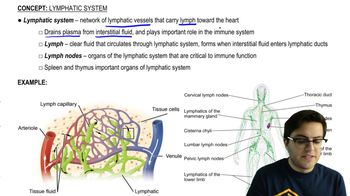
Lymphatic System

Heart Chambers

Heart chambers are compartments within the heart that play a role in pumping blood. Amphibians typically have a three-chambered heart, consisting of two atria and one ventricle, while humans have a four-chambered heart, with two atria and two ventricles. This difference affects how blood is circulated and oxygenated in these organisms.
Recommended video:
Guided course
05:13
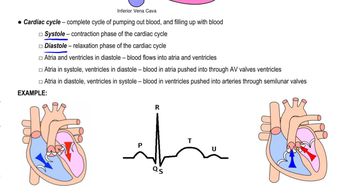
Heart Physiology

Circuits of Circulation

Circuits of circulation refer to the pathways through which blood travels in the body. Amphibians have a double circulatory system with pulmonary and systemic circuits, similar to humans. However, the separation of these circuits is incomplete in amphibians, leading to some mixing of oxygenated and deoxygenated blood, unlike the complete separation seen in humans.
Recommended video:
Guided course
06:28
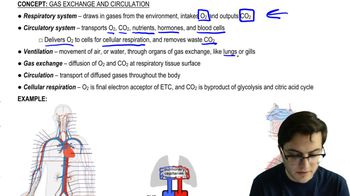
Gas Exchange and Circulation