Pearson+ LogoPearson+ Logo
Ch. 19 - Viruses
Campbell - Campbell Biology 11th Edition
Urry11th EditionCampbell BiologyISBN: 9789357423311Not the one you use?Change textbook
Chapter 19, Problem 1

Which of the following characteristics, structures, or processes is common to both bacteria and viruses?
a. Metabolism
b. Ribosomes
c. Genetic material composed of nucleic acid
d. Cell division

Verified step by step guidance
1
Understand the basic definitions: Bacteria are single-celled microorganisms that have a simple cell structure without a nucleus, while viruses are non-cellular entities that require a host cell to replicate.
Identify the characteristics of bacteria: Bacteria have a metabolism, contain ribosomes for protein synthesis, have genetic material in the form of DNA, and reproduce through cell division (binary fission).
Identify the characteristics of viruses: Viruses do not have a metabolism, lack ribosomes, and cannot perform cell division. They have genetic material, which can be either DNA or RNA, and replicate by hijacking the host cell's machinery.
Compare the characteristics: Both bacteria and viruses have genetic material composed of nucleic acids (either DNA or RNA). This is a common feature between the two.
Conclude the analysis: The characteristic common to both bacteria and viruses is the presence of genetic material composed of nucleic acids, which is option c.

Verified video answer for a similar problem:

This video solution was recommended by our tutors as helpful for the problem above.
Video duration:
47s
Was this helpful?

Key Concepts

Here are the essential concepts you must grasp in order to answer the question correctly.

Metabolism

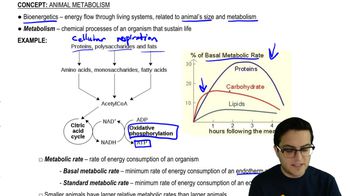
Metabolism refers to the chemical processes that occur within a living organism to maintain life, including energy production and synthesis of molecules. Bacteria have metabolic pathways that allow them to grow and reproduce independently. In contrast, viruses lack metabolic machinery and rely on host cells to perform metabolic functions necessary for their replication.
Recommended video:
Guided course
07:08
Metabolic Rate

Ribosomes

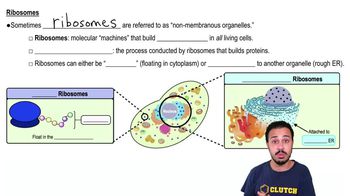
Ribosomes are cellular structures responsible for protein synthesis, translating genetic information into proteins. Bacteria possess ribosomes, enabling them to produce proteins essential for their survival and function. Viruses, however, do not have ribosomes and must hijack the host cell's ribosomes to synthesize viral proteins.
Recommended video:

Genetic Material Composed of Nucleic Acid

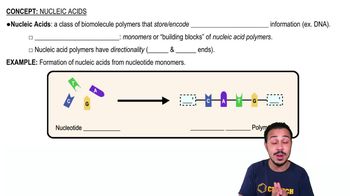
Both bacteria and viruses contain genetic material composed of nucleic acids, either DNA or RNA, which carries the instructions for their replication and function. Bacteria typically have a single circular DNA molecule, while viruses can have either DNA or RNA as their genetic material, depending on the type of virus.
Recommended video:
Guided course
03:22
Nucleic Acids