Pearson+ LogoPearson+ Logo
Ch. 7 - Fertility
Belk, Maier - Biology: Science for Life 6th Edition
Belk, Maier6th EditionBiology: Science for LifeISBN: 9780135214084Not the one you use?Change textbook
Chapter 7, Problem 10

After telophase I of meiosis, each daughter cell is ________.
a. Diploid, and the chromosomes are composed of one double-stranded DNA molecule.
b. Diploid, and the chromosomes are composed of two sister chromatids.
c. Haploid, and the chromosomes are composed of one double-stranded DNA molecule.
d. Haploid, and the chromosomes are composed of two sister chromatids.

Verified step by step guidance
1
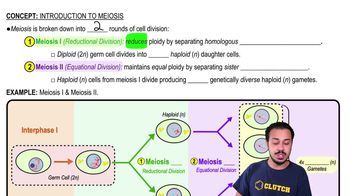
Understand the process of meiosis: Meiosis is a type of cell division that reduces the chromosome number by half, resulting in haploid cells. It consists of two stages: meiosis I and meiosis II. Meiosis I separates homologous chromosomes, while meiosis II separates sister chromatids.
Focus on telophase I: During telophase I, the homologous chromosomes (each consisting of two sister chromatids) are separated into two daughter cells. This marks the end of meiosis I, and the chromosome number is halved, making the cells haploid.
Recall the chromosome structure: At the end of telophase I, each chromosome still consists of two sister chromatids connected at the centromere. These chromatids are identical copies of DNA that were replicated during the S phase of the cell cycle.
Determine the ploidy: Since homologous chromosomes are separated during meiosis I, the resulting daughter cells are haploid. Each cell contains one set of chromosomes, rather than the two sets found in diploid cells.
Combine the information: After telophase I, each daughter cell is haploid, and the chromosomes are composed of two sister chromatids. This matches option d in the problem.

Verified video answer for a similar problem:

This video solution was recommended by our tutors as helpful for the problem above.
Video duration:
4m
Was this helpful?

Key Concepts

Here are the essential concepts you must grasp in order to answer the question correctly.

Meiosis

Meiosis is a specialized form of cell division that reduces the chromosome number by half, resulting in four haploid daughter cells. It consists of two sequential divisions: meiosis I and meiosis II. During meiosis I, homologous chromosomes are separated, while meiosis II separates sister chromatids. This process is essential for sexual reproduction, as it produces gametes with genetic diversity.
Recommended video:
Guided course
04:49
Meiosis I & Meiosis II

Haploid vs. Diploid

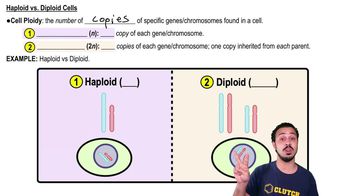
Haploid (n) cells contain one set of chromosomes, while diploid (2n) cells have two sets. In humans, somatic cells are diploid, containing 46 chromosomes, whereas gametes (sperm and egg) are haploid, containing 23 chromosomes. After meiosis I, the resulting daughter cells are haploid, as they contain only one set of chromosomes, which is crucial for maintaining the chromosome number across generations during fertilization.
Recommended video:
Guided course
04:14
Haploid vs. Diploid Cells

Chromatids

Chromatids are the two identical halves of a duplicated chromosome, joined together at a region called the centromere. During meiosis, after DNA replication, each chromosome consists of two sister chromatids. In telophase I of meiosis, the cells are haploid, and each chromosome still consists of two sister chromatids, which will be separated in meiosis II.
Recommended video:
Guided course
03:56
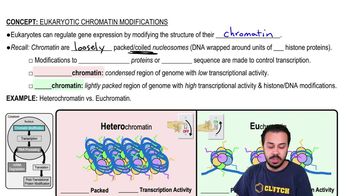
Eukaryotic Chromatin Modifications