Pearson+ LogoPearson+ Logo
Ch. 3 - Is It Possible to Supplement Your Way to Better Performance and Health?
Belk, Maier - Biology: Science for Life 6th Edition
Belk, Maier6th EditionBiology: Science for LifeISBN: 9780135214084Not the one you use?Change textbook
Chapter 3, Problem 1

What are the two main functions of nutrients?

Verified step by step guidance
1
Identify the broad categories of nutrients which include macronutrients (carbohydrates, proteins, and fats) and micronutrients (vitamins and minerals).
Understand that the first main function of nutrients is to provide energy. Macronutrients like carbohydrates, proteins, and fats are broken down by the body to release energy, which is measured in calories.
Recognize that the second main function of nutrients is to serve as building blocks for growth and maintenance. Proteins, for example, are used to build and repair tissues, while fats are essential for constructing cell membranes.
Acknowledge that nutrients also play a crucial role in regulating body processes. Vitamins and minerals, for instance, are involved in processes like blood clotting, bone formation, and immune system function.
Consider how the balance and variety of nutrients consumed impact overall health, supporting everything from brain function to muscle function.

Verified video answer for a similar problem:

This video solution was recommended by our tutors as helpful for the problem above.
Video duration:
2m
Was this helpful?

Key Concepts

Here are the essential concepts you must grasp in order to answer the question correctly.

Energy Provision

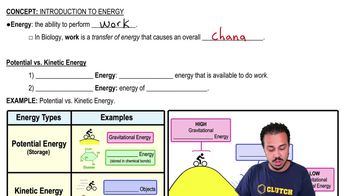
One of the primary functions of nutrients is to provide energy for the body's metabolic processes. Carbohydrates and fats are the main sources of energy, which are broken down during cellular respiration to produce ATP, the energy currency of cells. This energy is essential for all bodily functions, including movement, growth, and maintaining homeostasis.
Recommended video:
Guided course
04:58
Introduction to Energy

Building and Repairing Tissues

Nutrients also play a crucial role in building and repairing tissues. Proteins, composed of amino acids, are vital for the growth and repair of muscles, organs, and other tissues. Additionally, vitamins and minerals support various biochemical processes that facilitate tissue maintenance and regeneration, ensuring the body remains healthy and functional.
Recommended video:

Regulation of Body Processes

Nutrients are essential for regulating various physiological processes in the body. For instance, vitamins and minerals act as co-factors in enzymatic reactions, influencing metabolism, immune function, and hormone production. This regulatory role ensures that the body can respond appropriately to internal and external changes, maintaining overall health and balance.
Recommended video:
Guided course
04:19
1) RNA Processing