Pearson+ LogoPearson+ Logo
Ch. 14 - The Greatest Species on Earth?
Belk, Maier - Biology: Science for Life 6th Edition
Belk, Maier6th EditionBiology: Science for LifeISBN: 9780135214084Not the one you use?Change textbook
Chapter 14, Problem 8

Fungi feed by
a. Producing their own food with the help of sunlight
b. Chasing and capturing other living organisms
c. Growing on their food source and secreting chemicals to break it down
d. Filtering bacteria out of their surroundings
e. Producing spores

Verified step by step guidance
1
Understand the question: The problem is asking about the feeding mechanism of fungi, which is a key concept in biology related to how organisms obtain nutrients.
Recall the characteristics of fungi: Fungi are heterotrophic organisms, meaning they cannot produce their own food like plants. Instead, they rely on external sources of organic material for nutrition.
Review the process of extracellular digestion: Fungi secrete enzymes onto their food source to break down complex organic molecules into simpler compounds. These simpler compounds are then absorbed by the fungal cells.
Eliminate incorrect options: a) Fungi do not produce their own food using sunlight (this is characteristic of autotrophs like plants). b) Fungi do not chase or capture prey (this is characteristic of animals). d) Fungi do not filter bacteria from their surroundings (this is characteristic of some protists). e) Producing spores is related to reproduction, not feeding.
Select the correct answer: The correct mechanism is described in option c, which states that fungi grow on their food source and secrete chemicals to break it down, aligning with the process of extracellular digestion.

Verified video answer for a similar problem:

This video solution was recommended by our tutors as helpful for the problem above.
Video duration:
54s
Was this helpful?

Key Concepts

Here are the essential concepts you must grasp in order to answer the question correctly.

Fungal Nutrition

Fungi are heterotrophic organisms, meaning they cannot produce their own food through photosynthesis like plants. Instead, they obtain nutrients by absorbing organic matter from their environment. This process involves growing on or within their food source and secreting enzymes that break down complex substances into simpler compounds that can be absorbed.
Recommended video:
Guided course
05:58
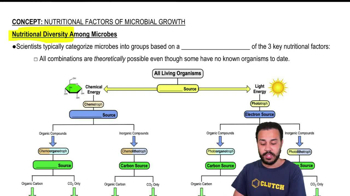
Nutritional Diversity Among Microbes

Extracellular Digestion

Fungi utilize a method known as extracellular digestion, where they release digestive enzymes into their surroundings. These enzymes decompose organic material outside their cells, allowing fungi to absorb the resulting small organic molecules. This adaptation enables fungi to thrive in various environments, breaking down complex organic matter such as dead plants and animals.
Recommended video:
Guided course
05:11
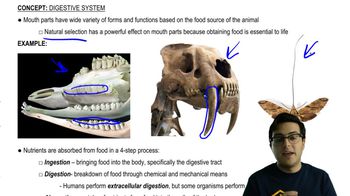
Digestion and Digestive Tracts

Saprophytic Lifestyle

Many fungi are saprophytes, meaning they feed on dead or decaying organic matter. This ecological role is crucial for nutrient cycling in ecosystems, as fungi decompose organic materials, returning essential nutrients to the soil. By breaking down complex organic compounds, saprophytic fungi play a vital role in maintaining the health of ecosystems.
Recommended video:
Guided course
04:55
Human Population